Olaoluwa Osuntokun, co-founder and chief technology officer of Lightning Labs, has published Layertree, a Bitcoin scaling design that lets thousands or even millions of people share a single Bitcoin output while keeping the right to take their money out alone.
The release, published on October 15, includes a 103-page paper, a reference implementation and an explainer site. It lands in the middle of Bitcoin’s long-running fight over how to give millions of people cheap payments without pushing them onto custodians.
One output, many owners
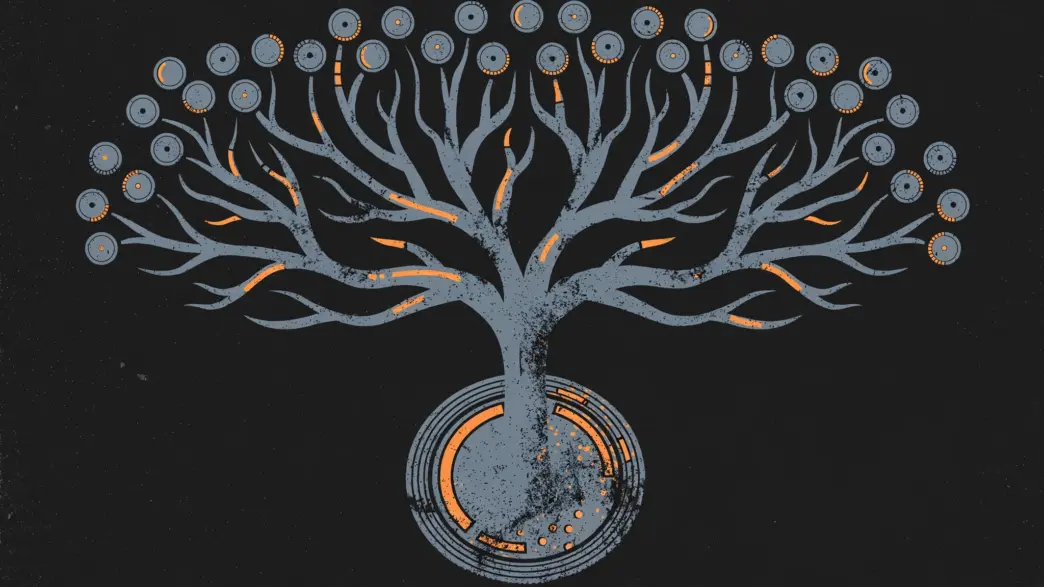
Today, every user’s balance sits in its own output on the blockchain, and every output costs block space and fees. Under Layertree, one output holds the funds of the whole group. Who owns what is recorded off-chain in a Merkle-sum tree: each member’s balance is a leaf, and every level above it stores a hash and the sum of the amounts below.
The shared output commits to the tree’s root hash. A covenant, a script that restricts how the output can be spent, checks every transaction against that root and forces the output to be recreated under the new root after each change. 
The result: any member can leave in a single transaction, at any time. There is no timelock, no stack of pre-signed transactions and no expiry date on the shared output.
An operator that cannot run off
A Layertree deployment is run by an operator. The operator admits new members, grafts groups of joiners into the tree and removes members whose lease has expired.
What the operator cannot do matters more. It holds no key over anyone’s balance, so it cannot seize funds, and it cannot block a valid withdrawal. Members pay each other off-chain, through channels inside their leaves or with signed vouchers, and a leaf can also hold a Lightning channel, which means members can receive payments over the Lightning Network.
The numbers
Osuntokun measured the design instead of estimating it. In a tree with 65,536 slots, leaving alone costs about 1,020 virtual bytes, roughly nine times a basic Bitcoin transaction, and that cost does not grow as more members join. Leaving an Ark-style tree of transactions costs about 2,511 virtual bytes in the paper’s comparison.
Joining is where the savings sit. When roughly 1,000 members join as one cohort, the cost falls below 1 virtual byte per member. With one purpose-built Merkle-sum opcode, which the project specifies but nobody has formally proposed yet, a solo exit at that size drops to about 540 virtual bytes.
What it does not promise
None of it runs on Bitcoin today. Layertree’s scripts rely on opcodes that have been proposed but not activated, so the design joins the queue of scaling plans waiting on Bitcoin’s covenant debate.
Admission is also not a right. Joining needs the operator’s signature, and anyone who funds a place in the tree without first verifying their own path in it risks frozen funds. And because every change spends and recreates the same output, exits queue behind Bitcoin’s relay limits on unconfirmed transaction chains, about 25 deep by default.
Parts of the design are formally verified, with a model written in the Lean proof assistant, and the paper works through the failure cases alongside the headline numbers.
Why it matters
Scaling designs that keep self-custody intact are the hardest problem in Bitcoin payments. Ark, channel factories and now Layertree all attack the same wall from different sides: block space is scarce, and per-user outputs do not scale to billions of people.
Coming from the team behind LND, the most widely deployed Lightning implementation, Layertree is a measured, fully specified entry in that race. Whether Bitcoin adopts the opcodes it needs is now the open question.
Read the full design at layertree.tech.