Schelling Point is a boutique advisory firm helping individuals and families hold Bitcoin as long-term, multi-generational capital.
It designs custody, inheritance, and continuity structures that are secure, usable, and survivable. The firm never holds client keys.
Founder Charlie Stevens, an actuarial economist by training, spoke about why the firm exists, how the market has changed, and what success would look like decades from now.
What problem does Schelling Point solve, and why does it matter now more than ever?
Schelling Point is built on one assumption: that Bitcoin continues to become the preferred long-term savings vehicle for families across the world. If that holds, families face a technical requirement that no previous asset imposed on them. 
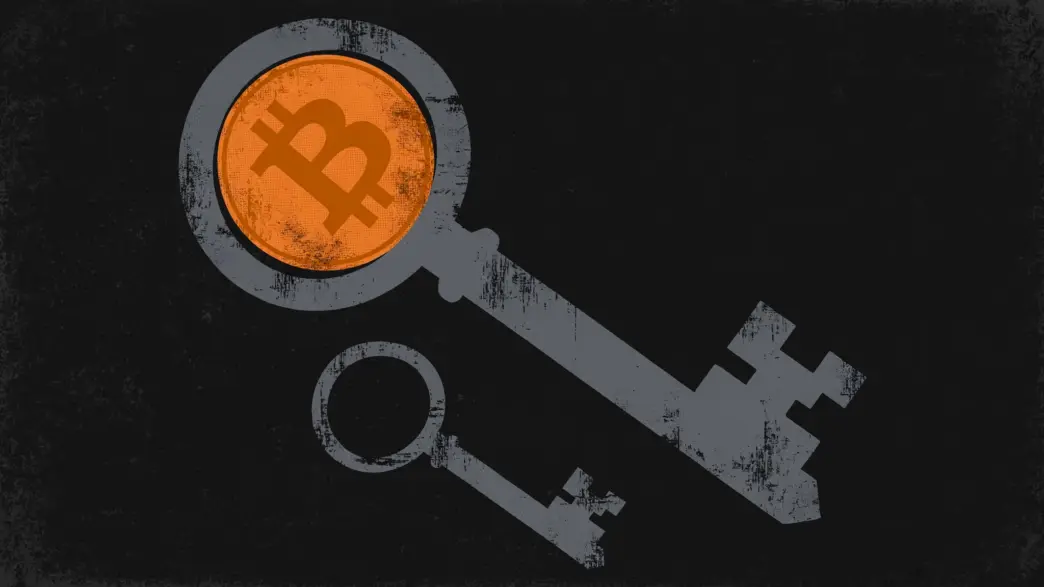
To truly own Bitcoin, they must hold the keys themselves. And holding keys well means two things at once: the structure has to be secure today, and control has to pass smoothly to the right people when the time comes. That is the gap we fill. Schelling Point is the long-term partner that accompanies a family as it takes self-custody of its Bitcoin, and stays alongside it across the years and into the next generation. We also work with families who use collaborative custody, or who choose to keep a portion in a custodial arrangement. We never hold a key ourselves. Our role is to help them understand the trade-offs, qualify the risks honestly, and make sure the whole family is integrated into whatever plan they decide on.
What was the “aha moment” that led you to start Schelling Point?
Two close friends, both Bitcoiners, passed away. In both cases the Bitcoin was lost, not because of any technical failure but because nothing had been planned before the event. That was the first part.
The second part came from years in Bitcoin circular economies, watching capable people avoid approaching their custody professionally. The reasons were always human: fear of anyone knowing how much they held, fear of seeming ignorant, fear of revealing that they held Bitcoin at all. So good people ended up with fragile setups and nobody to call.
Schelling Point exists to replace that fear with confidence. Everything is confidential. We never hold the keys. We never ask how much Bitcoin a client holds, and if they choose to tell us, we never record it digitally. We build the template, the client prints it and completes it by hand. We meet their family so the family feels part of the plan. And from then on, they have a professional contact if anything happens. Each family gets a companion that takes their privacy, their security, and their personal situation seriously.
What does Schelling Point’s ideal client look like, and how do you reach them?
Someone whose first concern is their family, who has recognised Bitcoin as the core of their long-term savings, and who understands that Bitcoin carries its own rules. Learned properly, those rules allow the asset to be kept secure and in the right hands across generations. Misunderstood, they lose it.
Our ideal client also recognises that this is now a profession in its own right, self-custody and Bitcoin estate planning, and sees the value in investing so that their family’s wealth is secure, passes on correctly, and is understood by the people who will inherit it. We reach them the way a private advisory should: through referral, through the families we already serve, and through patient, useful writing on the questions these families are already asking.
Describe a moment when client feedback changed Schelling Point’s direction.
Early on, clients began introducing me to their families and asking a simple question: if I am not around, or something happens to me, how do they reach you? I had not designed for that. It became clear that a standing contact, someone the family already knows and can call at the hardest moment, was a service in its own right rather than a courtesy. It became a recurring engagement, and it is now one of our most-chosen offerings.
What is Schelling Point’s retention strategy, and what metrics matter most?
Retention here is measured in years and decades, so the strategy is simple to state and hard to do: the client has to feel completely supported and paid attention to, and they have to know that Schelling Point will still be there at their death. That is the promise.
What makes it credible is depth of understanding. We know how people holding Bitcoin actually feel, the specific worries, the problems they run into, the questions they are embarrassed to ask. Clients stay with advisers who understand them. The metrics that matter to us are continuity of relationship, families fully integrated into the plan, and plans that are reviewed and still accurate when circumstances change.
How has the market changed since Schelling Point started, and how have you adapted?
Security incidents involving major hardware-wallet manufacturers prompted a serious re-examination of how people hold Bitcoin. Two lessons settled in. First, relying on a single manufacturer is itself a risk, so redundancy across vendors matters. Second, the hardware wallet is not the thing that endures. The key, its backup, how each key is designated, and the documentation around them: that is what lasts over decades.
We adapted by specialising in multi-vendor multisig and recommending it to most clients beyond the earliest stage, because it has the best chance of surviving any single shock. We also built the capacity to work alongside attorneys and accountants. Custody is only one part of the full picture when a family holds Bitcoin, and we would rather own our part well than pretend to cover all of it.
Where do you see this market heading in the next three to five years?
The core remains unchanged: families holding their Bitcoin in their own control, with counterparty risk, concentration risk, and single points of failure reduced as far as practical. That is the foundation and it will not move.
From that foundation the questions broaden. How do these Bitcoin savings relate to the family’s other assets? How should that capital be structured over the long run so the family actually reaches its objectives? Schelling Point intends to be able to serve families at that level, with self-custody always as the base from which everything else is built.
What emerging technology are you most excited about for this industry?
Miniscript, and in particular the ability to set keys that only become active after a defined period of time. Combined with simple, well-run family ceremonies, this allows setups that are both extremely robust and practical. Families can pass on their Bitcoin with real simplicity, without the structure itself becoming the risk.
How is AI changing Schelling Point’s work or the industry?
Self-custody arrangements are niche, and frontier AI models have broad knowledge rather than deep, context-specific judgement. There is a real temptation for a family to feed its custody details directly into a model. That is where the risk lives. Without a professional who understands exactly which pieces of information must never be revealed to any model, computer, or digital record, the convenience can undo the security. So we see Schelling Point’s position strengthening in an AI-heavy world, not weakening.
At the same time, we use it heavily where it is safe. Deep research on what-if scenarios. Demonstration content, in video and in writing, that lets a client grasp a specific concept quickly and thoroughly. And a great deal of our internal process is now built with it, which lets a small firm reach the families it is meant to serve faster.
What is on the roadmap that you are most excited about?
We have just completed a client portal: highly secure and specific to each family. It holds their custody map, which they can download and draw out by hand, along with their session summaries, proposals, instruction lists, and their complete custody framework. Everything a family needs is in one place, available whenever they need it, including on the day they need it most.
Charlie, what would success look like for you personally and for Schelling Point?
A strong base of families, in the hundreds, who feel looked after and at ease, and whose Bitcoin has remained secure for several decades and across several generations. That is the whole point. The family’s wealth is conserved and passed on. If that is true in thirty years, Schelling Point has done its job.
Charlie Stevens is the founder of Schelling Point (schellingpoint.xyz). LinkedIn: linkedin.com/in/charliestevens · X: @investbychrist · Firm: @schellingP21