Full page ad in WSJ against tokenized equities: pic.twitter.com/4X8mfDV80i
— Mike MacCana (@mikemaccana) October 25, 2026
A full-page ad in the Wall Street Journal’s October 24-25 weekend edition warned public company CEOs about tokenized stocks. It called them shadows with no vote, dividend, or legal standing.
Twenty-two companies, including Microsoft, Alphabet, Goldman Sachs, Wells Fargo, Arm, and McDonald’s, have since opted out of a plan to tokenize their shares. 
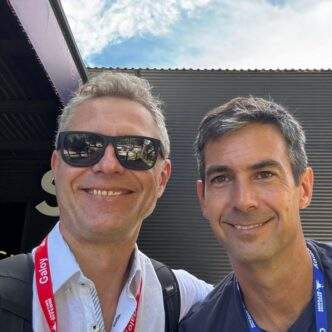
Andreas Kohl is the co-founder of Sequentia, a Bitcoin-anchored sidechain built by Concatena Labs. Sequentia calls itself a sidechain, not a layer 2. Every Sequentia block references a Bitcoin block at equal or greater height.
Lightning News put three questions to Kohl: what does a token holder legally own, whether issuer opt-outs block tokenized equity, and why tokenization needs a Bitcoin-anchored chain. His answers follow in full.
The ad calls tokenized stocks shadows with no vote, dividend, or legal standing. What does a Sequentia token holder own legally?
Andreas Kohl: Sequentia itself is just infrastructure for tokenized assets, and it supports the issuance of any type of asset, so what a holder owns legally depends on how that asset was issued. Indeed, there are some forms of “tokenized stocks” that could accurately be described as “shadows with no vote, dividend, or legal standing”, and I think it’s very unfortunate that these types of “solutions-looking-for-a-problem” products get bundled together and miscategorized alongside true tokenized equity.
It is already possible in many jurisdictions for companies to self-issue or use a service provider to issue true tokenized equity that can only be transferred between whitelisted addresses belonging to investors who are already known to the issuer. This solves the ownership and rights issue, but adds a fair bit of friction and loss of privacy compared to unrestricted tokens. A much more interesting approach is one which so far only Switzerland explicitly allows: the issuance of tokenized equity with no transfer restrictions, which therefore can basically be freely traded as a pseudonymous bearer certificate, and requires KYC only when registering in the shareholder registry, which is needed in order to exercise any rights such as voting or collecting dividends.
The team at Sequentia is currently pursuing the establishment of a tokenization service provider that will be based in the jurisdiction of Próspera, which has a regulatory election framework allowing companies to follow the rules of jurisdictions deemed to follow best practices, such as Switzerland. We’re betting on Próspera giving us a path to all of the legal benefits of Switzerland, combined with the fiscal and practical advantages of an even leaner, more competitive and more attentive regulatory agency and overall government.
Trust-minimization exists on a spectrum, and Sequentia will also be used for assets that are less than fully trust-minimized. On the lighter end, these are assets that delegate some controls to a virtual asset service provider (VASP); on the heavier end, it could even be shares held by a central securities depository (CSD), but with more transparent supply supervision for the issuer. These setups are, in and of themselves, an improvement over the status quo, and they create a positive signal and pressure that may help make even better setups legally and practically viable in the future. Our own service provider will offer several different types of issuance across this spectrum, each with its tradeoffs explained, but it is hopefully just one of many on Sequentia: one that happens to be made by the same creators as the network itself, but not necessarily representative of what people issue and trade over Sequentia. The end goal and ultimate vision is still full disintermediation between holders and issuers.
On a separate note, since your mention of a “Sequentia token holder” can be read ambiguously: Sequentia does have a network-related token called Sequence (SEQ), which functions as a type of bond that gives its holder the ability to participate in the process of block production, and therefore collect a “yield” in the form of the transaction fees paid by users transacting on the network. But neither the protocol itself nor the applications we’re developing on it favor or treat SEQ specially over any other asset issued by anyone else over Sequentia, and our main target user doesn’t ever need SEQ or to be informed of its existence. Sequence is therefore not a native network cryptocurrency, or “coin” for short: a monetary function should semantically be required for something to be called a coin.
Twenty-two giants just opted out of tokenizing their shares. If issuers can veto this, does tokenized equity only work with Wall Street’s permission?
Andreas Kohl: Even if issuers opt out of directly tokenizing their shares, that doesn’t necessarily prevent their shares from being traded as tokenized derivatives, either standalone or as part of tokenized funds. I think there’s a place for that too, but we have to recognize tokenization of financial instruments for what it is: a very broad and general label for a large variety of different methods to create different types of vehicles with different trust profiles. Anything with an issuer you can name implies some level of trust in said issuer; that’s inevitable. The only question of interest to asset tokenization is this: whether owning or trading an asset must necessarily involve trust in any other parties besides the issuer, and if so, whom and to what extent?
Today, most publicly traded equity in the US is, legally speaking, owned by a company called Cede & Co. Other markets usually have analogous institutions, broadly known as central securities depositories (CSDs). These are often “independent” or industry-controlled bodies with a large degree of government integration, like the Federal Reserve and central banks in general. Public stock markets are truly only ever listing claims to assets that actually stay owned by the CSD.
The dirty little secret in all of this is that the interests of the owners of CSDs aren’t always aligned with those of issuers, nor with those of most stock market traders. Although talking about this is still deemed more or less controversial, it is becoming undeniable that the same interests that control CSDs are also responsible for massive market manipulations that exploit the CSD system through the practice of “naked short selling”, i.e., lending more of a stock for shorts than is actually available at said price, which in other words is printing value out of thin air and picking winners and losers in the market, exactly as central banks do.
It has been possible for companies to opt out of the CSD system in most jurisdictions for a very long time. But historically this has always meant greater frictions for trading, lower and more fractured liquidity, in some cases simply due to practical and network effect impediments, and in others due to regulatory hurdles that seem to exist deliberately to dissuade companies from trying to dodge de facto handing over control to a CSD.
Tokenization doesn’t solve regulatory hurdles, but on one hand it does make it possible to operate more smoothly within said hurdles, possibly making it more viable to opt out of the CSD system, and on the other it also reinforces the power of regulatory arbitrage, since a company can more easily change jurisdictions and take its tokenized equity “with them” to a different regulatory framework than it can with equity that has already been forfeited to a CSD in order to list on national stock markets. This may over time pressure governments to make it easier to issue publicly tradeable equity outside of the control of CSDs.
Of course, all of this assumes that stock tokenization is done with this intention, which is not always the case: many “stock tokens” are still ultimately claims to equity held in the name of a CSD, which in my opinion defeats much of the purpose of tokenization unless it adds something the CSD system doesn’t. True tokenized equity does need the issuer’s permission, as it should; what it shouldn’t need is the permission of the intermediaries that currently stand between issuers and their shareholders.
Tokenized stocks already trade on altcoin chains. Why does this need a Bitcoin-anchored sidechain, and does anchoring fix the risks?
Andreas Kohl: It is already possible to execute “trustless” swaps (trades involving no trust in any trade intermediary or counterparty) between Bitcoin on the mainchain and assets issued on top of any altcoin chain, which, depending on how these assets were issued, could imply that participants in such a trade are not trusting anyone other than the issuing entity or person behind said assets. The problem is that performing such a swap is complicated, expensive, and takes a very long time, so most people prefer the convenience of trading on a centralized exchange (CEX) despite the additional layer of trust it adds.
Part of what makes it take so long is the fact that in a swap between Bitcoin and any other independent blockchain, there is something that we can call “reorg” or “finality” risk. In short, there’s always a chance that a transaction could be reversed on most blockchain networks; that probability just gets lower over time, which is why exchanges typically ask for more than one Bitcoin network confirmation before crediting an account with a BTC deposit. Anchoring doesn’t remove the risk of Bitcoin reorganizing, but it synchronizes Sequentia with Bitcoin such that the two must always reorganize together, also meaning Sequentia can never reorganize on its own. If one side of a swap between BTC and a token on Sequentia is reversed, the other side will always also be reversed, so that no harm is done.
Compared to swaps between chains that are not synchronized in this way, swaps between the Sequentia and Bitcoin networks can happen much faster, not just on-chain, but also off-chain using protocols such as Lightning or Ark, which both work over Sequentia just as they do over Bitcoin.
Also, altcoin chains by definition always impose their own network currency, or “altcoin”, as the only direct and native means to pay for network transaction fees. Sequentia instead has a completely free market allowing potentially any token issued on it to be used for network transaction fees, so it does not have its own “coin” that would otherwise compete with and be philosophically incompatible with Bitcoin. The only “special” asset on Sequentia applications is Bitcoin itself, as in real BTC on the mainchain, which we consider the monetary standard for the ecosystem we’re building. The only balance that’s relevant to always show users, even when empty, is BTC, and since Sequentia and Bitcoin share the same address and seed formats, using a Sequentia wallet will really feel a lot like using a single-chain Bitcoin wallet, despite it actually using two blockchain networks.
As for the risks anchoring doesn’t address: issuers are more in control of the network than block producers are; it is they, after all, who can add or switch recognition of tokenized shares from one network to another at any time, thereby moving most of their users with them. The value that the SEQ token will gain from the expectation of revenue from network fees is more than proportionate to the level of trust that users truly have to place in block producers, given that the rights represented by the tokens are enforced by the issuers rather than the network protocol itself, creating aligned incentives that ensure network security insofar as it depends on block producers not acting maliciously. And should a majority of stakers act maliciously anyway, Sequentia also has a Bitcoin checkpointing mechanism, separate from anchoring, which uses Bitcoin’s proof of work to protect the immutability of the Sequentia ledger, at least somewhat (i.e., beyond a two-week window). This provides no censorship resistance, but immutability is arguably much more important than censorship resistance for a network dedicated to issuer-controlled assets.
So whom, besides the issuer, does owning or trading an asset on Sequentia require you to trust, and to what extent? At the far end of the spectrum, owning it requires no CSD, and no one else holding it in their name. Trading it against Bitcoin requires no trust in any trade intermediary or counterparty, and carries no finality risk beyond Bitcoin’s own. What remains is some trust in block producers, kept in check by the issuers who enforce the rights the tokens represent, and by Bitcoin, which both anchors and checkpoints the ledger. Not every asset on Sequentia will start there, and not every one needs to; at the opposite end of the spectrum there may be CSD-held tokenized stocks that give issuers better visibility over supply.
Each step along the spectrum is an improvement over the status quo, and pressure toward the next. Bitcoin as the money, the only truly trustless asset and safe store of value; financial instruments as more speculative assets that imply trust in their issuer; and as little as possible in between: that is the purpose of Sequentia.
Want to learn more? Find Andreas on X: @aejkohl
Try out the Sequentia testnet at https://sequentiatestnet.com/ and join the telegram community at @sequentia_official