

There’s a peculiar transformation that happens to people who discover Bitcoin. It doesn’t happen overnight. You don’t wake up one Tuesday morning suddenly believing that a digital asset with no CEO, no customer service department, and no physical form is the future of money.
Instead, bitcoin maximalist conviction develops in stages—predictable, almost inevitable phases that nearly every serious Bitcoiner experiences. Whether you’re currently dismissing Bitcoin as internet funny money or already measuring your net worth in satoshis, understanding these stages helps you recognize where you are on the journey and what to expect next.
Table of Contents
Bitcoin Maximalist Psychology: What Makes A Maxi Tick?
Research into bitcoin maximalist characteristics reveals distinct personality traits and behaviors:
Core Traits:
- High conviction – Comfortable making concentrated bets based on deep research
- Clarity-seeking – Prefer simple, robust solutions over complex alternatives
- FOMO-resistant – Can ignore hype cycles and short-term noise
- Simplicity over complexity – Value Bitcoin’s focused approach
Philosophical Inclinations:
Bitcoin maximalist individuals tend toward:
- Meritocratic over welfare-oriented justice
- Economically liberal political attitudes
- Skepticism of centralized authority
- Long-term thinking over short-term gains
Studies show people who invest in Bitcoin often prefer merit-based systems and economically liberal policies, distinguishing them from typical equity investors.
Stage 1: The Bitcoin Denier – “Bitcoin is A Scam”
Every bitcoin maximalist starts here, even if they won’t admit it later. The Denier sees Bitcoin through the lens of existing financial systems and finds it… ridiculous.
The Denier Mindset
At this stage, Bitcoin seems impractical, absurd, or downright laughable. Common dismissals include:
- “It’s just made-up internet money with no intrinsic value”
- “Governments will ban it tomorrow”
- “It’s only used by criminals and dark web dealers”
- “I can’t even hold it—how can it be real money?”
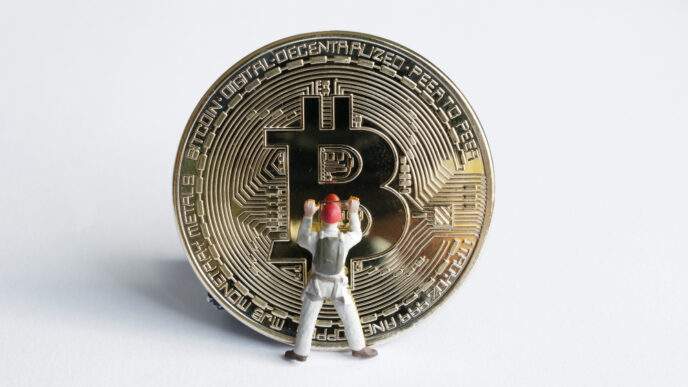
Most deniers dismiss Bitcoin without meaningful research. One common pattern? Confusing Bitcoin with the physical “coin” images used in media, leading to genuine confusion about what it actually is.
What Breaks Through Denial?
Curiosity eventually overrides skepticism. A price surge catches your attention. A friend won’t shut up about it. An article makes you pause. Something plants a seed: “maybe I should actually look into this“.
Stage 2: The Bitcoin Hater – “I Know About Bitcoin, And I Hate It”
Denial fades. Resentment arrives. The bitcoin hater acknowledges Bitcoin exists—but focuses exclusively on attacking it.
The Hater’s Arsenal
Haters cherry-pick criticisms, usually based on trendy headlines rather than research:
- “Bitcoin wastes energy!” (Ignoring that Bitcoin mining increasingly captures stranded or surplus renewable energy).
- “It’s too volatile to be money!” (Missing that volatility decreases as market cap grows).
- “Other cryptos are faster/cheaper/better!” (Not understanding why Bitcoin’s conservative approach matters).
Ironically, many vocal Haters eventually become the most passionate bitcoin maximalist advocates—once they actually study and understand what they’re criticizing.
The Hater’s Turning Point
A Hater moves forward when they encounter information that directly contradicts their assumptions. Energy FUD crumbles when they learn about mining’s role in renewable energy development. Volatility concerns fade when they zoom out on decade-long charts. The hate transforms into curiosity.
Stage 3: The Bitcoin Skeptic – “Interesting, But I’m Not Yet Convinced”
This is the most intellectually honest stage. The Skeptic approaches Bitcoin with cautious curiosity, asking genuine questions rather than rhetorical attacks.
The Skeptic’s Questions:
- “Is Bitcoin really better than traditional money?”
- “What if it’s a bubble that eventually pops?”
- “Can governments just ban it completely?”
- “How does this blockchain thing actually work?”
This is where real learning begins. Skeptics watch documentaries, read the whitepaper, join discussions in meetups, and start understanding concepts like decentralization, proof-of-work, and sound money.
The Bitcoin Maximalist Principles
At this stage, future bitcoin maximalist convictions start forming:
- Appreciation for Bitcoin’s leaderless and decentralized structure
- Understanding of the 21 million supply cap
- Recognition of inflation as a hidden tax
- First glimpses of “money without masters”
Many Skeptics remain in this stage indefinitely. Others experience the “aha moment” and rapidly progress forward.
Stage 4: The Bitcoin Trader – “Let’s Make Some Money”
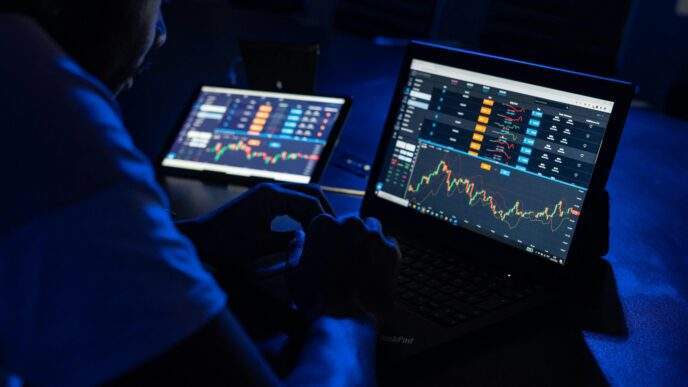
The Trader has moved past skepticism into action—but for the wrong reasons. They view Bitcoin primarily as a speculative asset, an opportunity to “buy low, sell high”.
Trader Behaviors
Obsessively checking price charts multiple times daily
- Panic selling during dips, FOMO buying during rallies.
- Chasing short-term profits without understanding long-term value.
- Treating Bitcoin like a stock or commodity.
While Traders interact with Bitcoin mechanically—sending transactions, managing wallets, experiencing volatility—they rarely grasp its deeper significance. They’re playing the same game as with any other tradable asset.
Turning Point
Market volatility provides the harsh education. After enough whipsaws, emotional exhaustion sets in. Traders start asking: “Is there a better way to approach this?”
Stage 5: The Bitcoin Investor – “This Is More Than Just A Trade”
Maturity arrives. The bitcoin investor shifts from short-term speculation to long-term conviction. Bitcoin transitions from “an asset I’m trading” to “a monetary revolution I’m participating in”.
Understanding deepens around:
- Bitcoin’s fixed supply (21 million coins, no exceptions)
- The halving cycle (reducing issuance every four years)
- Decentralization (making Bitcoin resistant to censorship and control)
- Monetary debasement (how inflation systematically transfers wealth upward)
Investors hold through market cycles. They view Bitcoin as a hedge against inflation and a safeguard against central bank excess. Bitcoin maximalist literature becomes required reading: The Bitcoin Standard, Satoshi’s whitepaper, essays from thought leaders.
Here’s where bitcoin maximalist thinking crystallizes: Bitcoin isn’t competing with other digital currencies for “market share”—it’s competing with centuries of centralized monetary control. There’s Bitcoin, and there’s everything else.
Stage 6: The Bitcoin Hodler – “Not Your Keys, Not Your Coins”
“Hodler” originated from a 2013 forum typo (“I AM HODLING”) and became a bitcoin maximalist badge of honor. Hodlers embody unwavering commitment to long-term Bitcoin ownership, regardless of price volatility.
The Hodler Philosophy:
- “Time in the market beats timing the market”
- “Bitcoin is digital gold—you don’t trade gold, you hold it”
- “Zoom out” (focus on years, not days)
Hodlers take self-custody seriously. They understand that Bitcoin held on exchanges isn’t truly theirs—they’re merely IOUs from custodians. Hardware wallets, multi-signature setups, and metal backup plates become standard practice.
Bitcoin Maximalist Cultural Markers
Hodlers adopt distinctive behaviors and beliefs:
- Measuring time in “blocks” rather than days
- Celebrating Bitcoin’s halving events like holidays
- Rejecting altcoins as distractions or scams
- Orange-pilling friends and family (educating newcomers)
Bitcoin transcends being an investment—it becomes a lifestyle.
Stage 7: The Bitcoin Maximalist Final Form – “Bitcoin Is Hope”
The ultimate stage. The bitcoin Maxi (short for maximalist) sees Bitcoin as more than money, technology, or investment—it’s a moral imperative for global justice, sustainability, and human freedom.
What Bitcoin Maximalist Maxis Believe
On Money: Bitcoin is superior to all other digital currencies due to its decentralized network, robust security, fixed supply, and proven track record. Altcoins and CBDC are viewed as unnecessary, inferior, or fundamentally compromised by having identifiable founders and insider allocations.
On Economics: The bitcoin maximalist recognizes that inflation-driven monetary systems are incompatible with technological deflation. As AI and automation make goods cheaper, inflationary fiat currencies artificially prop up prices, concentrating wealth among those closest to money creation.
On Sustainability: Maxis understand that Bitcoin’s energy consumption is a feature, not a bug. Proof-of-work grounds Bitcoin in physical reality (energy), preventing the stake-based centralization plaguing proof-of-stake systems. Mining increasingly acts as a “vacuum cleaner” for stranded renewable energy, providing economic incentives for green energy development.
On Freedom: Bitcoin enables financial sovereignty. No government permission required to save. No banks needed to transact. No authority can confiscate your wealth if properly secured. For the bitcoin maximalist, this represents humanity’s first truly neutral, global monetary system.
The Bitcoin Maximalist Mission
Maxis don’t just hold Bitcoin—they actively:
- Educate others about Bitcoin’s properties and potential
- Support Bitcoin-related projects and businesses
- Advocate for Bitcoin adoption in their communities
- Defend Bitcoin’s principles against attacks and misinformation
The Minimalist Core
Despite deep technical knowledge, the bitcoin maximalist proposition is strikingly simple: Bitcoin is nothing more (or less) than a decentralized, tamper-proof ledger—a truthful record that no one can corrupt.
For Maxis, Bitcoin’s value isn’t just its scarcity or security—it’s what those qualities protect: the truth, perhaps humanity’s most valuable asset.
The “Bitcoin Flu”
Maxis often describe a phenomenon called the “Bitcoin flu”—symptoms include:
- Obsessively consuming Bitcoin content
- Losing hours to podcasts, articles, and the whitepaper
- Bringing up Bitcoin in unrelated conversations
- Seeing fiat currency problems everywhere
- Measuring time preferences in “low vs. high time preference” terms
If you have these symptoms, congratulations—you’re progressing through the stages.
Whether you’re currently a Denier reading this with skepticism, a Trader trying to time the market, or a Hodler measuring your stack in satoshis, there’s no “right” stage to be in—only the next one.
The bitcoin maximalist journey is personal and transformative. It challenges conventional ideas about money, power, and technology. It forces us to question systems we’ve always accepted and imagine a future built on truly decentralized principles.
For those willing to take the journey seriously, the rewards extend far beyond financial gains. It’s about understanding the profound implications of truly decentralized money and its potential to reshape civilization.
Bitcoin is a unique technology. Once you understand it, you cannot misunderstand it. Progressing through the seven stages—from Denier to Maxi—isn’t just possible; for many who study deeply enough, it’s inevitable.
The question isn’t whether you’ll become a bitcoin maximalist—it’s whether you’re willing to do the work to find out. What stage are you in?