


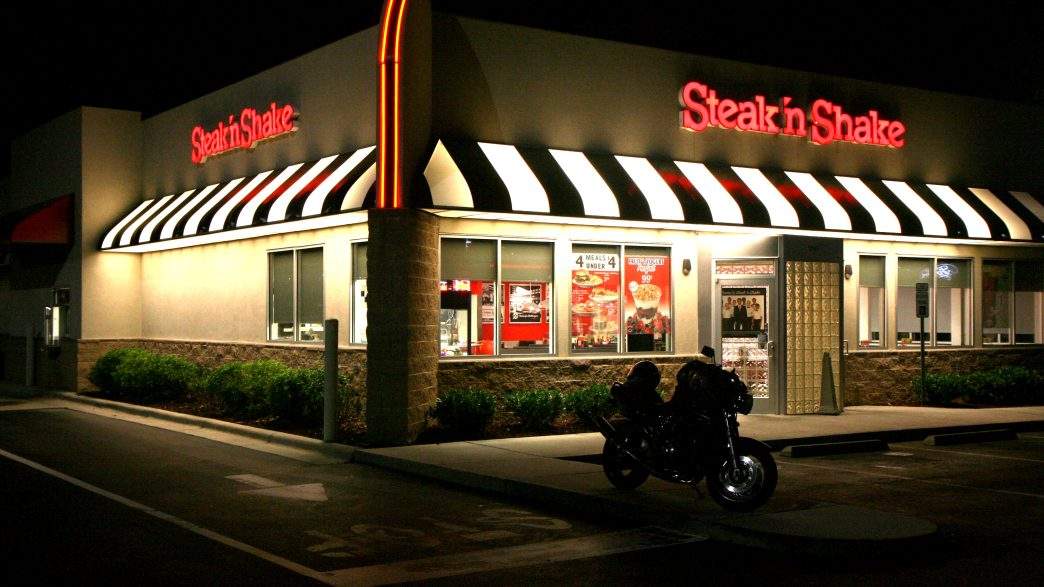
Steak ’n Shake, said it realized a 50% reduction in payment fees compared to traditional credit cards. The chain also said it saw sales spike 10.7% after integrating bitcoin payments.
Founded in 1934, the classic American burger restaurant embraced Bitcoin payments earlier this year across its U.S. and European company-operated restaurants.
This initiative is one of the clearest examples of Bitcoin moving beyond speculative investment into practical use as a retail payment method.
Business Drivers Behind Bitcoin Adoption
With card processing fees continuing to climb—merchants in the U.S. paid $172 billion in 2023 alone—retailers are always looking for ways to improve efficiency.
Steak ’n Shake’s experience confirms Bitcoin acceptance translates into tangible savings, with the company reporting up to a 50% reduction in payment fees compared to traditional credit cards.
In retail sectors where net profit margins typically range from 2% to 5%, halving payment costs can significantly enhance profitability or fund reinvestment in quality, technology, or customer experience.
But cost is only part of the story. Bitcoin transactions settle faster and are immune to chargebacks, offering operational benefits. For payments operations teams, this means fewer disputes, lower fraud risk, and more reliable cash flow—advantages that can reduce overhead and administrative burden.
Meeting Customers Where They Are
Perhaps most compelling from a revenue-growth perspective is how Bitcoin acceptance has influenced customer behavior. On the day of launch, Steak ’n Shake accounted for 0.2% of global Bitcoin transactions.
Following the rollout, the company observed a sustained spike in customer traffic, reflecting that bitcoin acceptance meets emerging consumer expectations, especially among younger demographics.
This dynamic underscores an important consideration for retail payment strategists: enabling Bitcoin payments is both a facility upgrade and a customer acquisition strategy focused on engaging tech-savvy, high-value segments increasingly comfortable with bitcoin and Lightning payments.
Strategic Differentiation for Legacy Brands
Steak ’n Shake’s decision to place Bitcoin on equal footing with cash and credit cards signals a shift. By normalizing bitcoin payments as a standard option, the company has positioned itself as a future-forward brand willing to adopt emerging technologies pragmatically rather than as a marketing afterthought.
This approach is instructive for enterprises weighing digital payment innovation. Bitcoin is no longer a fringe payment experiment but a legitimate component of an omnichannel payment strategy, capable of enhancing brand equity and competitive positioning.
Growth Metrics Affirming Cryptocurrency’s Role in Retail
Broader market data reinforces the significance of Steak ’n Shake’s move. Crypto payment volume surpassed $1.3 trillion in 2024, with projections suggesting retail crypto transactions could exceed $4.5 trillion annually by 2030. Meanwhile, surveys show 75% of U.S. retailers aim to accept crypto or stablecoins within the next two years, reflecting mainstream momentum.
Implications for Payments Executives
For CFOs, CROs, CTOs, and payment strategists in retail, Steak ’n Shake presents a real-world benchmark:
- Cost Efficiency: Cutting payment processing fees by half can materially impact margin in a low-margin sector.
- Operational Streamlining: Faster settlements and reduced chargeback exposure improve liquidity and reduce administrative costs.
- Customer Engagement: Meeting crypto-native customers where they prefer to pay unlocks new revenue streams.
- Brand Modernization: Early adoption signals innovation leadership and future-proofs payment offerings.
As enterprise retail continues to digitize payments and diversify rails, the Steak ’n Shake example bolsters the argument for Bitcoin’s maturity as a commerce medium—ready to be integrated into global payment portfolios beyond speculation and hype.