


Fees of 0.5% to 3.5% + fixed fees for card processing create a constant drag on retail margins. Then came Steak’N’Shake and said “No more!” and received a 50% reduction in processing fees. The trick? Integrating bitcoin payments.
Integrating Bitcoin Payments in Larger Enterprises?
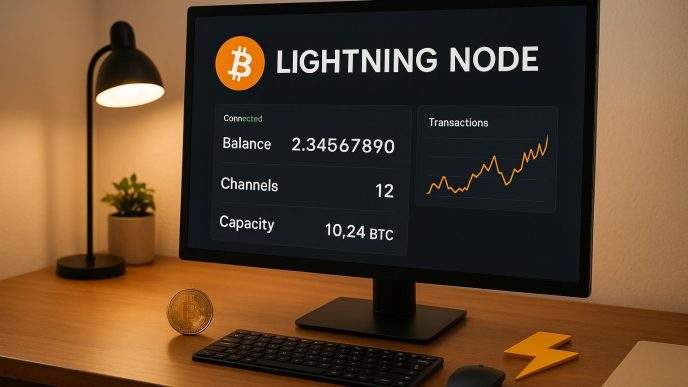
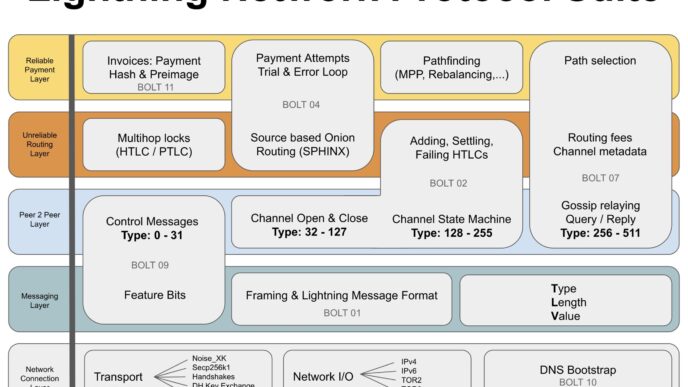
The successful integration of Bitcoin payments by multinational fast-food chain, like Steak ‘n Shake, only worked by leveraging the Lightning Network. Thanks to Lightning payments, customers can pay with any wallet that support Lightning. Currently, 950+ Million users have access to Lightning via apps like Cashapp, Coinbase, Binance etc.
With Lightning, a number of performance benefits can be achieved. Funds are settled in seconds at miniscule fees. This means potential savings of millions over the course of just a few years. No chargebacks, no forex conversions, Lightning enables truly instant, global payments.
Platforms like PayWithFlash have introduced robust enterprise-ready payment architectures to allow for non-custodial settlement over Lightning.
Custodial payment processing models on the other hand will always eat up margins due to the costs associated. However, with a non-custodial architecture, bitcoin payments work more like cash but with the efficiency of digital payments.
According to Flash CEO Pierre Corbin, integrating bitcoin can get quick board approval. “We can skip the compliance question because we never touch customer money, it goes straight from customers to the seller in real time. We are cutting out intermediaries, which is a major cost reduction and also allows for faster integration and roll-out times compared to centralized solutions”, explains Corbin.
Payment Processing Architecture: Custodial vs. Non-Custodial
For a large enterprise, the decision between custodial and non-custodial bitcoin payment processors is the key choice.
For CFO’s the mandate of Risk, Cost, and Control aligns best with non-custodial architecture as can be seen in the comparison table below.
| Feature Priority | Custodial Model | Non-Custodial Model | Strategic Implication |
| Asset Control & Solvency | ZERO Control. Funds are legally the processor’s until fiat settlement is cleared (Counterparty Risk). | Full Control (Self-Custody). Funds pushed to multi-sig wallet immediately. (Zero Third-Party Solvency Risk). | Liquidity: Eliminate dependency on a payment processor’s balance sheet for your daily cash flow. |
| Fee Optimization | Low. Processor takes an additional layer of fees (e.g., 0.5% – 1.0%) for compliance, instant fiat conversion and custody. | Maximum. Only pay the negligible, sub-penny Lightning Network routing fee. Convert at optimal rates with preferred broker. | Margin Capture: Reclaim the processor’s margin directly into your revenue stream. |
| Settlement Time | Delayed. Must wait for processor’s scheduled daily/weekly fiat bank transfer. | Instant (Real-Time). Funds are usable and verifiable in your on-chain wallet seconds after the customer pays. | Working Capital Velocity: Real-time visibility and access to revenue, eliminating T+N float risk. |
Point-of-Sale (POS) System Logic
The POS must handle instantaneous, irreversible, and variable-fee payments.
- Instant Finality Protocol: Lightning Network based finality is faster than waiting for multiple on-chain confirmations, making it viable for fast-food and any retail environment.
- UX/UI Design: The customer-facing system must clearly display the amount in fiat, the conversion to BTC/Sats, and a countdown timer for the LN invoice, minimizing the risk of price fluctuation.
Lightning No Longer Fringe Technology
The Steak ‘n Shake case demonstrates the success of lightning payments. Accepting Bitcoin payments is no longer a short-lived hype. Lightning payments cut fees, attract new customers, and future-proof payment optimization strategies.
Enterprise solutions such as PayWithFlash’s non-custodial model offer retailers the maximal technical benefit of Bitcoin: zero intermediary risk, elegant compliance, instant settlement and full control.
This model is favored by enterprises with a strong alignment to decentralization or those seeking to hold a portion of their revenue in Bitcoin. The ultimate technical choice depends on the CFO’s risk appetite and the enterprise’s willingness to build a dedicated digital asset technology stack.