



CBDC’s the next attack on Bitcoin? It’s a question that sounds dramatic—until you look at what a central bank digital currency (CBDC) is designed to do: digitize fiat money while keeping state-level control over issuance, rules, and (depending on design) transaction visibility.
That design goal collides head-on with what makes Bitcoin disruptive: permissionless access, censorship-resistance, and the ability to self-custody outside legacy gatekeepers.
But here’s the real twist: CBDC’s are the next attack on Bitcoin not because they “beat” Bitcoin technologically, but because they can be used as a policy and infrastructure weapon—a state-grade payments rail that can reshape incentives, squeeze private alternatives, and normalize a world where money is software with administrators.
How will the attacks pan out? What is hype vs. realistic risk? And how can Bitcoiners (and everyday people) can think clearly about the coming era?
Table of Contents
What a CBDC Really Is (And Isn’t)
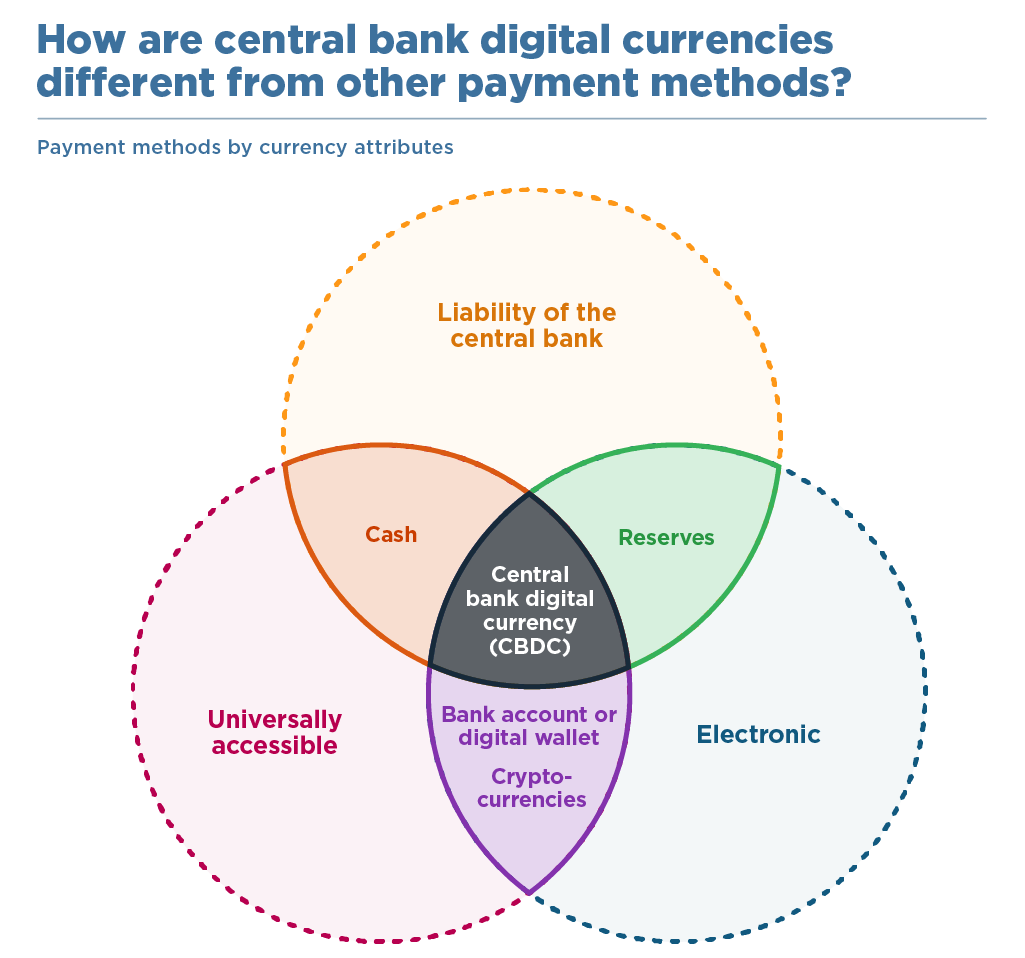
CBDC’s the next attack on Bitcoin starts with definitions. A CBDC is not “crypto.” It’s a digital liability of a central bank—a new form of base money meant to sit alongside cash and commercial bank deposits. The U.S. Federal Reserve’s discussion paper frames CBDC as a potential “safe, digital payment option,” while also flagging key policy constraints around privacy and illicit finance.
In practice, CBDC design choices vary, but most proposals converge on:
- a two-tier (intermediated) structure (banks/payment providers interface with users).
- some form of identity and compliance layer (KYC/AML),
- and either online-only or limited offline functionality.
Bitcoin is the opposite: it’s not issued by a state, does not require permission, and settlement is final when confirmed on-chain.
The Real Battlefield Is Control
CBDC’s the next attack on Bitcoin isn’t mainly about speed, UX, or even fees. It’s about governance: who can change the rules of money, and who must comply.
Bitcoin’s key property isn’t “digital payments.” It’s credible neutrality: no central operator can rewrite monetary policy, freeze balances, or selectively deny access. CBDCs, by definition, are administered money—digital cash with a policy engine.
This is why CBDC opponents focus on surveillance and censorship risk. The Cato Institute’s overview captures the fear bluntly: a CBDC could become a “centralized surveillance system for all financial transacting,” even if not present at launch, because capabilities can be added later.
That framing is controversial—but it’s not irrational. A CBDC expands the technical surface area for control. Once money is a programmable ledger entry, policy becomes code.
Programmability: The Most Misunderstood Weapon
CBDC’s the next attack on Bitcoin often gets reduced to one viral phrase: “programmable money.” The nuance matters.
There are two very different ideas people mix up:
- Programmable payments: “If X is acquired/ delivered, pay Y.” Think escrow, automated payroll, conditional disbursement.
- Programmable money: “You may only spend on X,” or “this expires,” or “this can’t be sent to that address.”
Critics worry CBDCs create the platform for the second category. Supporters often emphasize the first.
Even privacy-focused institutional sources acknowledge the design tension: a high level of privacy can reduce the system’s ability to detect suspicious activity (trade-offs between privacy and controls). The BIS Innovation Hub’s work on offline CBDC design explicitly highlights trade-offs such as privacy, usability, security, and anomaly detection.
Bottom line: CBDC’s the next attack on Bitcoin if “programmability” is implemented as behavior shaping, not just automation.
Privacy Is Where the Narrative War Will Be Won
CBDC’s the next attack on Bitcoin becomes far more plausible if CBDCs successfully claim: “We’re as private as cash, just digital.”
The European Central Bank is directly pursuing that message. The ECB says the offline digital euro is designed so that “only you and the recipient” know the details of offline payments, aiming for “cash-like privacy.”
That statement matters because it’s a strategic counter to Bitcoin’s privacy critique of CBDCs. If major jurisdictions ship credible offline privacy (and people believe it), the “CBDC = total surveillance” narrative weakens.
But there are still hard questions:
- Offline privacy may apply only to small-value payments, with caps.
- Online payments can still involve intermediaries, compliance, and data access regimes.
- The trust model changes: cash privacy is enforced by physics; CBDC privacy is enforced by policy + hardware + compliance + audits.
The IMF’s privacy-focused note emphasizes that CBDC systems could generate rich personal data (transaction history, behavioral patterns) and that “technology alone cannot ensure privacy protection,” especially due to re-identification risks from metadata.
So yes—CBDC’s the next attack on Bitcoin could be fought on privacy, but it won’t be settled by slogans. It will be settled by design, law, oversight, and real-world rollout.
The Quiet Attack Is Incentives + Restrictions
CBDC’s the next attack on Bitcoin is most realistic when you stop imagining an epic showdown and start imagining policy nudges that quietly reshape behavior.
Here are the highest-probability pressure points:
1) Cash restrictions + CBDC convenience
If cash access declines (limits, closures, fees), CBDCs can be offered as the “safe replacement.” That doesn’t kill Bitcoin, but it reduces the everyday habit of using non-traceable money.
2) Compliance and reporting expansion
If CBDC rails become the preferred settlement layer, regulators may push harder on “off-rail” assets. That often means Bitcoin touchpoints (exchanges, brokers, payment processors) get stricter.
3) Merchant incentives
If CBDC acceptance comes with low fees, tax credits, or instant settlement—Bitcoin adoption has to compete with subsidized state money.
4) Banking integration
CBDCs can be woven into payroll, benefits, and tax payments, making them the default monetary substrate for normal life.
None of this “breaks” Bitcoin. But it can attempt to down-sell Bitcoin.
That’s why CBDC’s the next attack on Bitcoin can look less like a ban and more like a slow attempt to starve the on-ramps and monopolize the UX.
Is It Actually an Ad for Bitcoin?
Here’s the paradox: CBDC’s the next attack on Bitcoin can backfire.
Why?
Because the more governments educate the public that “money is now digital,” the more people begin asking:
- “If it’s digital, why can it inflate?”
- “If it’s digital, why can it be frozen?”
- “If it’s digital, why must I ask permission?”
- “If it’s digital, why do I need intermediaries at all?”
This is exactly where Bitcoin thrives: as the opt-out.
Even the IMF note makes clear that CBDC design creates trade-offs between data use and privacy protection—and that trust is foundational. The moment people perceive CBDCs as “surveillance money,” Bitcoin’s value proposition becomes more legible overnight.
So yes—CBDC’s the next attack on Bitcoin could also become Bitcoin’s next mass marketing campaign.
Parting Shot
CBDC’s the next attack on Bitcoin is a credible concern—not because CBDCs can replicate Bitcoin, but because they can be deployed as policy infrastructure that increases surveillance capacity, strengthens financial gatekeeping, and makes alternative rails less convenient.
At the same time, the existence of CBDCs may push millions of people to finally understand what Bitcoin actually is: not “an app,” not “a stock,” but a non-state monetary network that doesn’t require permission.
The next few years won’t be Bitcoin vs. CBDCs in a clean cage match. It will be a competition between two futures:
- a future where money becomes more digital and more controllable,
- and a future where money becomes more digital and more sovereign.