



Key Takeaways
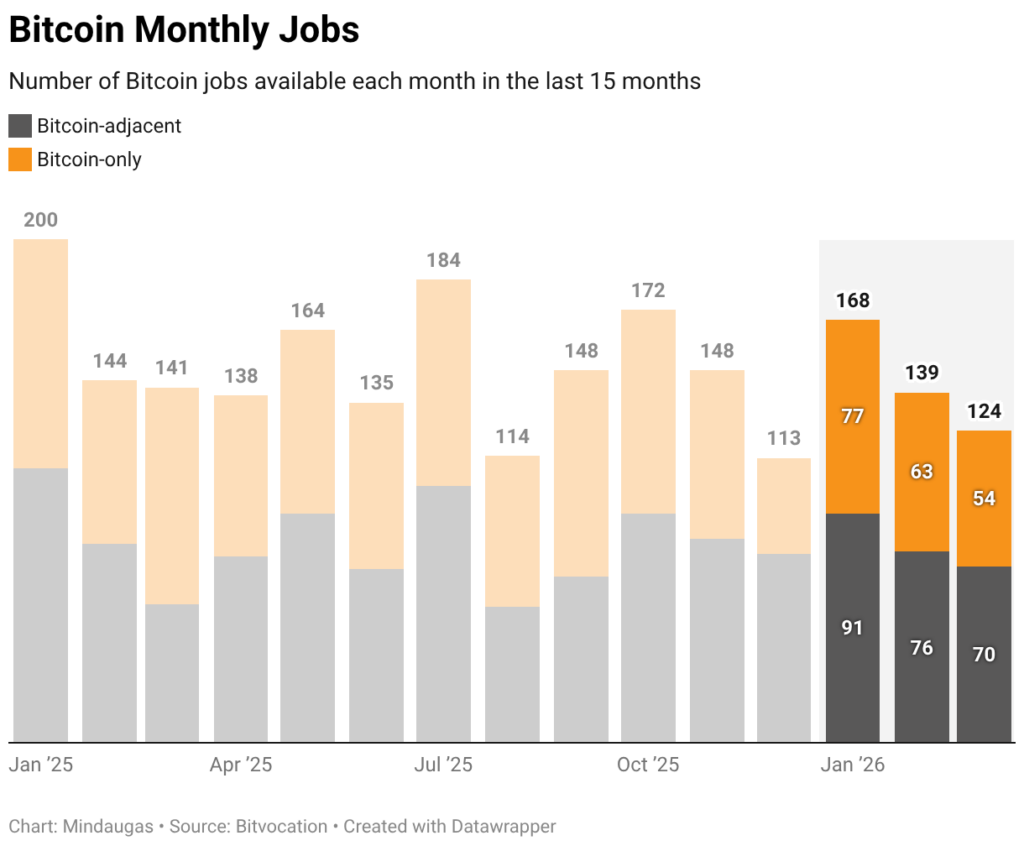
- 431 Bitcoin jobs posted across 77 companies in Q1 2026
- – 10% compared to Q1 2025
- 45% Bitcoin-only — the distributed ecosystem keeps growing
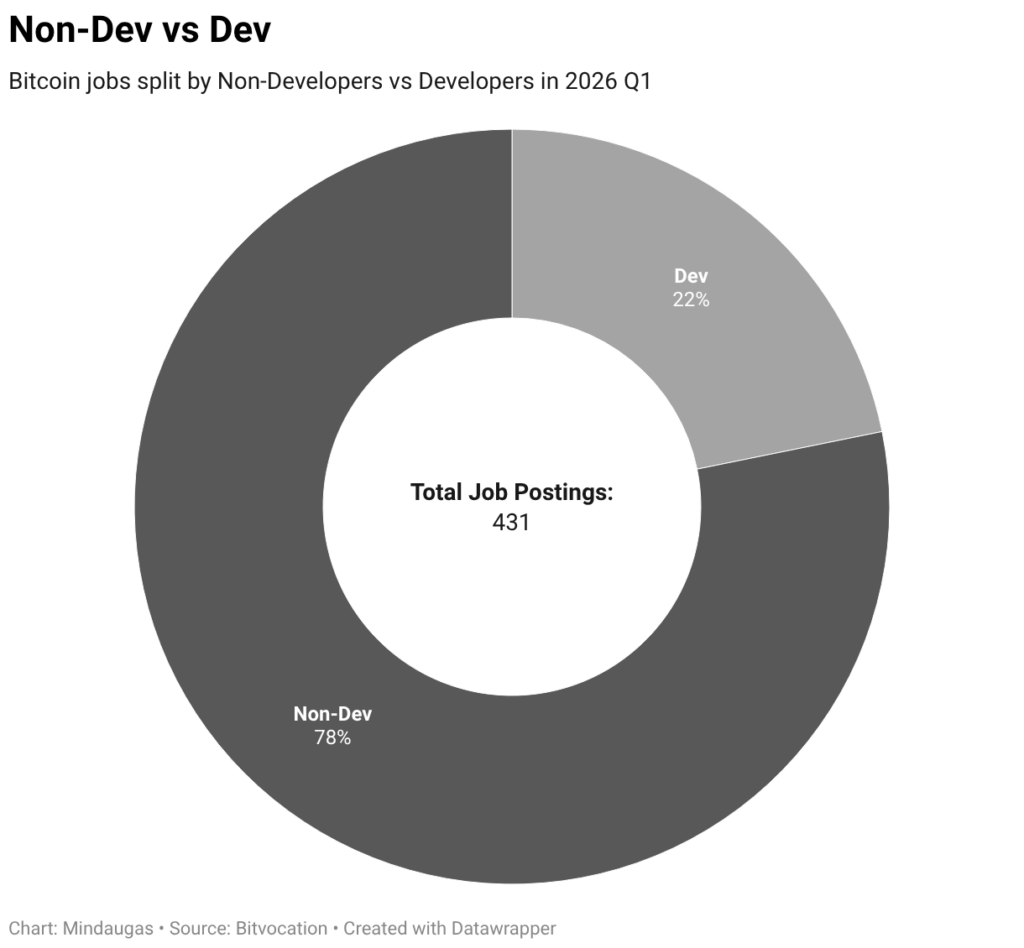
- 78% non-dev — Bitcoin needs far more than developers
- 46% remote — steady, not growing
- Mid-level dominates — Bitcoin-only companies hire flatter, with fewer managers and more senior builders
Bitvocation’s Q1 2026 report shows a still-active but slightly softer Bitcoin hiring market in Q1 2026: 431 jobs across 77 companies, down roughly 10% year over year versus Q1 2025. The seasonal pattern remains intact—January was strongest, then demand tapered through the quarter—suggesting moderation rather than collapse.
For sector professionals, the signal is that hiring continues, but competition for roles is likely firmer and employers are becoming more selective.
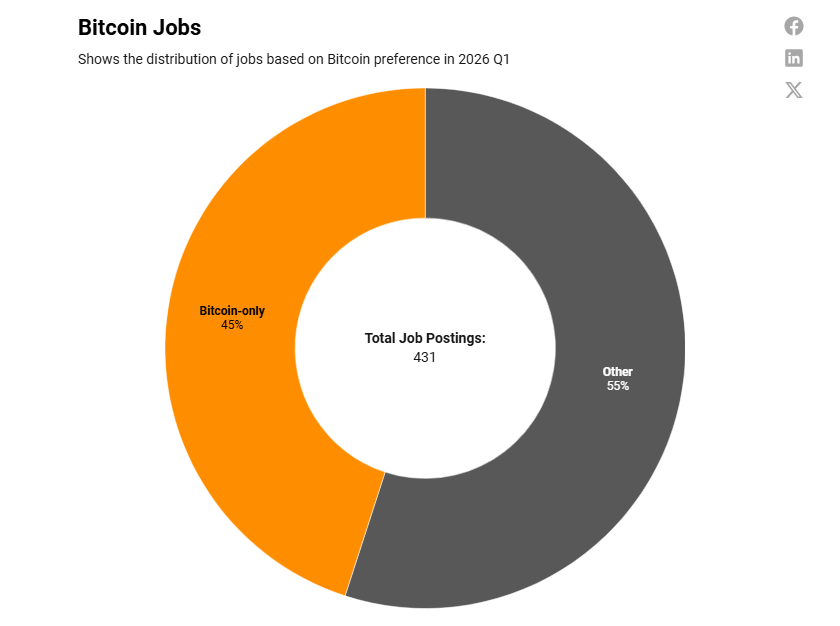
A major structural takeaway is that the Bitcoin-only ecosystem is broad and distributed. Of the 77 hiring companies, 52 were Bitcoin-only, posting 194 jobs; no single employer dominates that segment. By contrast, 25 Bitcoin-adjacent companies posted 237 jobs, but the top 10 generated about 90% of those openings.
For professionals, this means discovery strategy matters: adjacent hiring is concentrated around a handful of recognizable employers, while Bitcoin-native hiring is fragmented and requires stronger visibility, networking, and direct market presence. 
The report reinforces that Bitcoin is not primarily a developer-only labor market. Roughly 78% of postings were non-developer roles, spanning functions such as financial control, social media, and product ownership.
The practical implication for operators, marketers, finance professionals, and product leaders is clear: domain alignment and execution ability are at least as important as engineering background. Sector participants who understand Bitcoin and can ship in business-critical functions remain highly relevant.
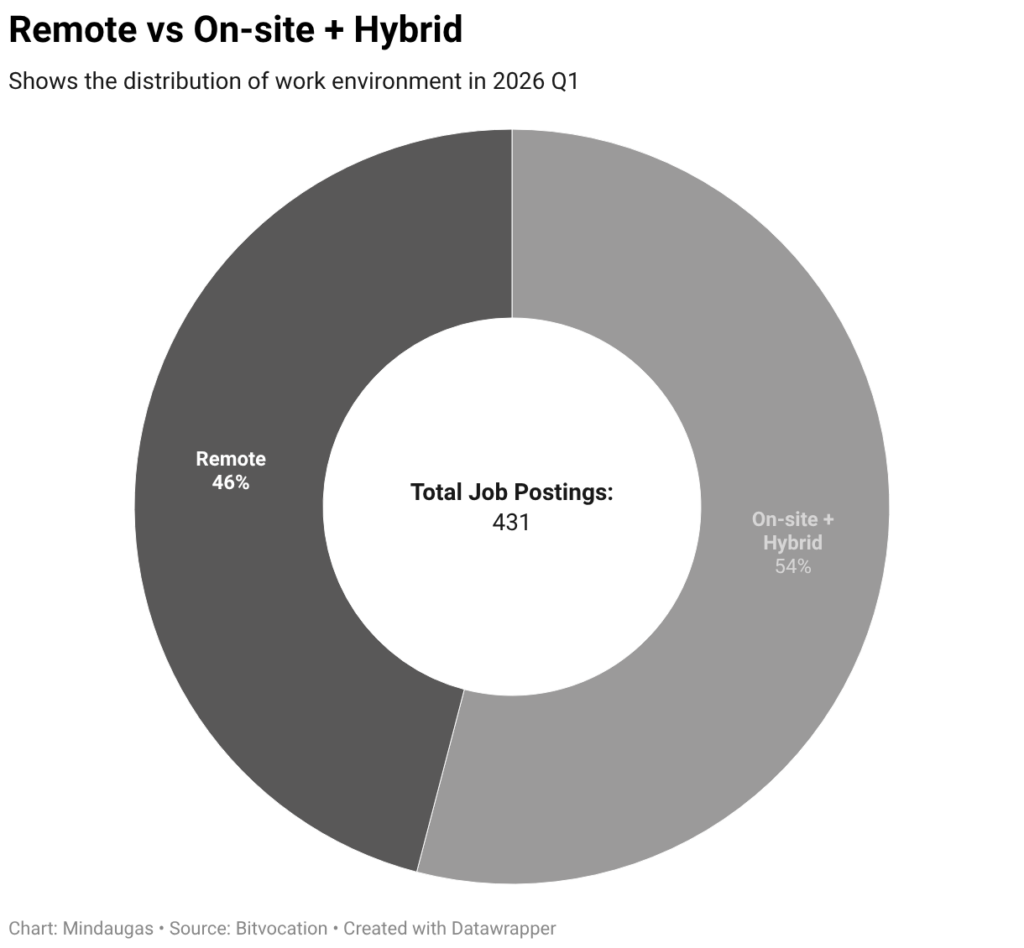
On work model, 46% of roles were remote, which the report describes as steady rather than expanding. Bitcoin-only firms were close to a 50/50 split between remote and on-site, so remote work remains meaningful, but no longer looks like the default growth lever.
Professionals should read this as a cue that in-person edge is increasing: conferences, meetups, and face-to-face relationship-building may matter more in winning roles or partnerships than they did during the strongest remote expansion phase.
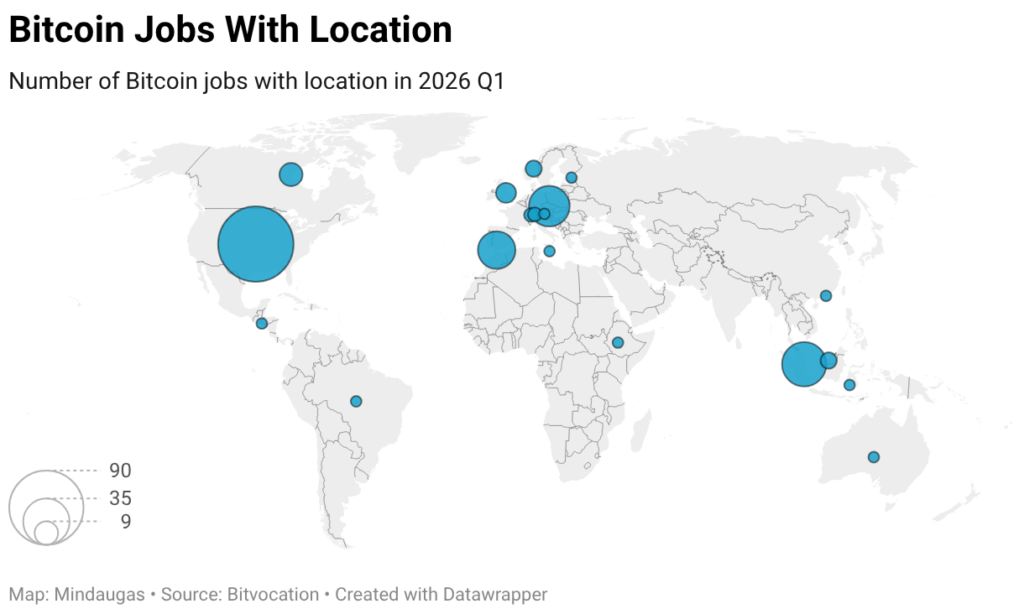
Geographically, the report confirms that while the US remains the largest on-site market with 93 on-site jobs, meaningful hubs are also developing in Singapore, Czechia, and Gibraltar. For employers, this suggests a more internationally distributed talent and company formation landscape.
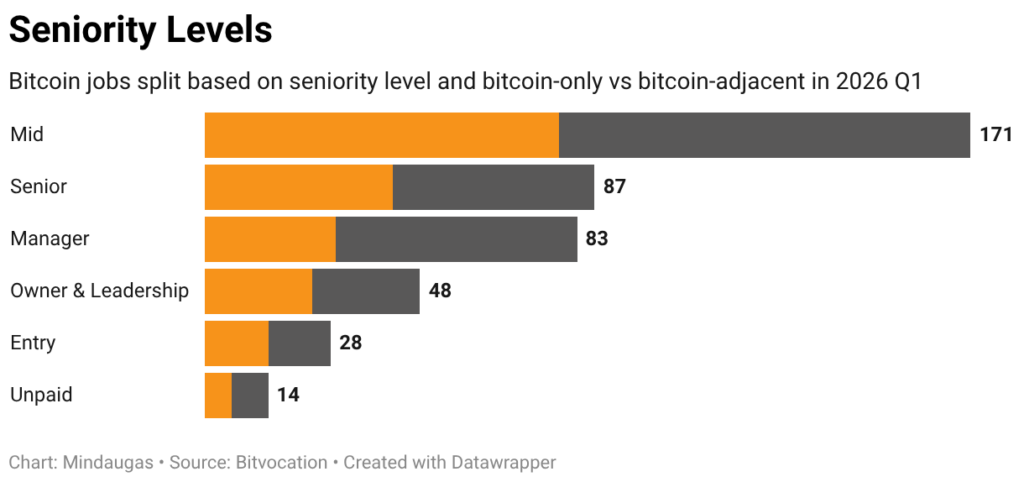
Seniority data indicates that mid-level roles dominate (40%), followed by senior (20%) and manager (19%) positions. The report highlights an important difference between company types: Bitcoin-only firms skew toward senior individual contributors and directors, with fewer managers, while adjacent firms look more traditionally hierarchical.
For professionals, the message is that Bitcoin-native employers often value autonomy, ownership, and hands-on delivery more than classic managerial layering. Candidates who can independently execute and show tangible output may fit better than those whose profile is mainly people-management.
What This Means for Professionals in the Sector
For job seekers, the best strategy is not just applying more—it is becoming more discoverable in a fragmented market. In Bitcoin-only hiring, no single recruiter or job board has full coverage, so reputation signals, public proof of work, community visibility, and direct network access matter disproportionately.
For hiring leaders, the market appears deep enough to source across multiple business functions, but fragmented enough that talent acquisition depends on brand presence and targeted outreach. Firms that rely only on passive inbound applications may miss strong candidates who are active in the ecosystem but not visible through mainstream channels.
For service providers, ecosystem builders, and investors, the most interesting signal is structural: Bitcoin hiring remains distributed, cross-functional, and geographically diverse despite softer year-over-year volume. That usually points to a market still building underlying capacity, not merely cycling through hype-driven hiring.
Q1 2026 does not suggest a booming Bitcoin labor market, but it does show a durable and maturing one: lower volume than last year, strong non-dev demand, stable remote availability, rising importance of regional hubs, and a hiring model that rewards visible operators more than traditional career packaging. For professionals in the sector, the winning profile is increasingly clear: mission-aligned, self-directed, cross-functional, and easy to find.
Original Report Author: Mindaugas