

You are sitting there, maybe late at night, maybe early in the morning before anyone else is awake, in awe you check your wallet balance. One coin. Maybe two. Maybe more. And a question forms, slow and insistent, like water finding a crack in stone:
Is there a smarter way to accumulate more of this?
Not a faster way. Not a flashier way. A smarter way.
A way that fits what you actually know about Bitcoin, what it really is, what makes it different from every other asset on earth, and why you started taking it seriously in the first place.
A way to accumulate that’s pure, perfect and beautiful. The ikigai of DCA.
Just like Bitcoin is an igikai for you, an endeavour where purpose and profit culminate, there must be a way to accumulate bitcoin that feels just as ingenious.
You’ve bought on exchanges. You’ve done the DCA. You’ve watched prices move in both directions and held through all of it because you understand what you’re holding.
You’re not new to this.
You’re not here for a quick trade. You stack for your last name. Someone who thinks in terms of decades, not days.
And yet.
There’s a nagging awareness, somewhere at the back of your mind, that buying Bitcoin from an exchange, however convenient, however reliable, is not quite the best move.
Every sat you acquire through a platform is a sat that came attached to a paper trail. Somewhere, in some data center in a regulated jurisdiction, there is a file with your name on it next to every purchase you have ever made.
You know this. It bothers you more than you let on.
This letter is for you.
Not for the person who just downloaded his first wallet last month. Not for the person who owns a fraction of a Bitcoin and is hoping it will make him millionaire overnight.
This is for the person who owns at least one full Bitcoin and is ready to think about the next step. Not just accumulating more, but accumulating it differently. More purely. More privately. More in the spirit of what Bitcoin was actually designed to be.
What is if you could earn Bitcoin instead of buying it?
What if you could earn it the way Satoshi did?
Completely without banks and ID checks?
Continue reading. This is a letter the biggest opportunity Bitcoiners are missing out on.
First, Let Us Be Honest About What You Get When You Buy Bitcoin on an Exchange
You get Bitcoin in the form of a legal promise. Until you withdraw it to your own wallet.
But let’s look carefully at what else you get, because this is where the story gets complicated.
When you purchase Bitcoin through an exchange, you hand over your government ID. Your legal name. Your bank account details. Your home address, in many cases. You agree to terms of service that give the exchange extraordinary latitude over your account, the ability to freeze it, restrict it, report it, or shut it down entirely if the regulatory winds shift.
And the coins you receive? They arrive with a history. A blockchain history that starts, as far as your wallet is concerned, at the exchange’s withdrawal address. That exchange has already flagged those coins as originating from a KYC-verified account linked to your identity. Every sat is tagged, not in a way you can see with the naked eye, but in a way that chain analysis firms—the ones governments pay handsomely—can reconstruct in extraordinary detail.
This is not a fringe concern. It is the designed architecture of regulated exchange activity. It is compliance. And it is, by its nature, surveillance.
Let’s recap.
Buying KYC (Know Your Customer) means your personal identity, your name and address is directly tied to your bitcoin wallet. Your wallet becomes part of a system of control and surveillance. But more importantly, it puts you at risk.
What if your the exchange has a data breach and personal information of users gets stolen?
If you don’t believe this, here’s a video of a Bitcoin holder getting attacked in broad daylight as he is walking down a street with his daughter. His name and address was leaked, the attackers knew everything:
Nobody should fear such attacks.
But in order to avoid this, we must re-think how we acquire bitcoin.
KYC-bitcoin is problematic because it directly contradicts Bitcoin’s value proposition. Bitcoin opposes censorship and financial surveillance.
But KYC requirements introduce “taint” by linking an your identity to bitcoin units, which the state can then use for surveillance or to stop you from sending or spending your bitcoin.
Smart Bitcoiners Are Mining Bitcoin, Not Buying
What happens when you mine bitcoin instead of buying them?
Your bitcoin mining machine runs. It generates bitcoin 24/7.
But these bitcoins are not linked to your personal information. They get sent to your wallet of choice directly from the block reward.
Every ten minutes or so, somewhere on the network, a block is found and a reward is distributed proportionally across the pool.
Your wallet address—the one you control, with your keys—receives a direct payment from this reward, also called the coinbase transaction.
No exchange touched it.
No compliance officer approved it.
No identity verification was required.
The protocol paid you directly, the same way it paid Satoshi Nakamoto in January 2009.
Those are wild sats. Born from energy. Delivered by mathematics. Owned completely, from the first moment, by you.
The term was popularized by the Bitcoin mining company Sazmining, but the philosophy it describes is as old as Bitcoin itself. It is simply the original model — the one that existed before exchanges, before brokerages, before all the infrastructure that made buying easy and selling convenient and holding tracked.
Want it more clear?
Bitcoin earned directly through mining is superior in terms of privacy and the avoidance of potential “taint”. Mining is inherently an anonymous role, and obtaining units this way allows a user to bypass the identity-linked history associated with secondary market trades. By earning bitcoin through mining, a bitcoiner avoids the primary source of taint: the public distribution of transactions linked to a known identity.
There Is a Version of Bitcoin That Has Never Touched an Exchange
It’s called a wild sat.
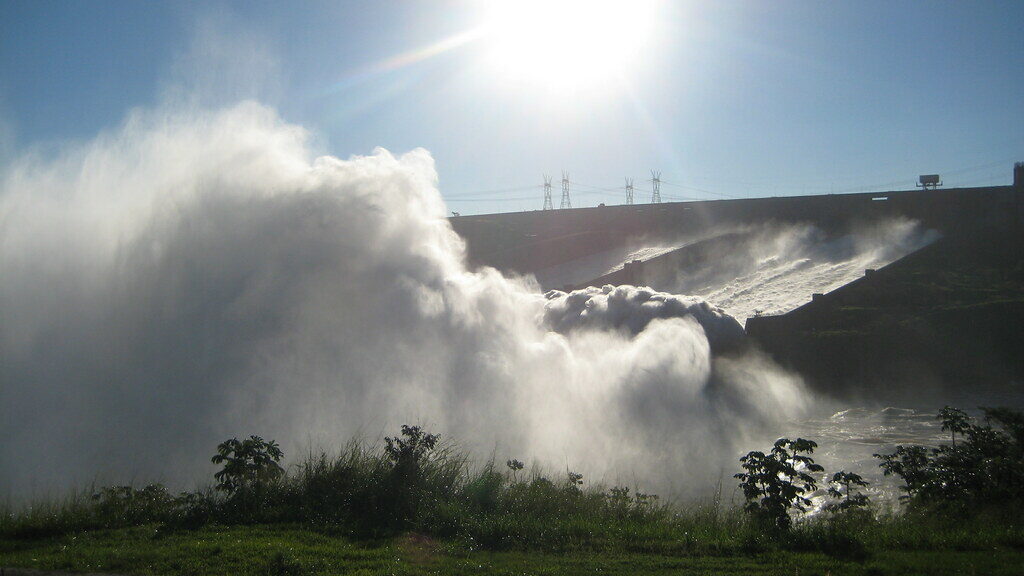
A wild sat is a satoshi, the smallest unit of Bitcoin, that comes directly from the network itself. Not purchased. Not transferred. Earned. Generated with physical effort. By water that flows towards gravity moving giant turbines. By a machine that converts electricity into computation, and computation into freshly minted Bitcoin, paid out by the protocol to a wallet you control.
Bitcoiners Must Mine, Here’s Why
When you buy Bitcoin, you pay today’s price. Whatever the market says Bitcoin is worth at the moment you click Buy, that is what you pay. The price is set by the market, and you take it or leave it.
When you mine Bitcoin, something entirely different happens.
Your machine runs every day, whether you’re watching or sleeping, whether the price is up or down, whether the headlines are euphoric or grim. Every day, it produces new Bitcoins at whatever the production cost is that day. Not the market price. The production cost—the implied value of what it costs in electricity and hardware to create that Bitcoin from scratch.
However, the machine and electricity cost stays fixed, it never changes. You basically “lock-in” the price.
Here is what matters most: the sats you mine this week, at today’s production cost, are worth exactly as much as a sat mined at any other time. Bitcoin doesn’t know when it was mined. A sat is a sat. The ones your machine earns during a trough accumulate quietly in your wallet, and when the price rises—as it has after every single previous trough in Bitcoin’s history—those sats are worth more. Not because you bought the dip, but because your machine was running the whole time.
That’s the miner’s advantage. You don’t need to time the market. The machine keeps printing bitcoin for you.
But Here Is Where Most People Stop — And Why They Shouldn’t
“I don’t know how to run a Bitcoin miner.”
“I don’t have somewhere to put it.”
“I don’t want to deal with the noise, the heat, the electricity bills, the technical headaches.”
These are reasonable concerns. Industrial-grade Bitcoin mining hardware is not a consumer appliance. It’s loud (unless water cooled), it’s hot (unless, you guessed, water cooled or immersion cooled). It draws serious power. Running one at home without the right infrastructure is genuinely impractical for most people.
And for a long time, that was the end of the conversation for individuals who wanted to mine but didn’t have the means to build out industrial infrastructure.
This is where a real revolution has started. It’s not 2009 any more, it’s 2026 and that conversation is now wide open because of one small but significant innovation.
This innovation is so transformative that thousands of Bitcoiners have joined the movement. They are starting to understand they should’ve never stopped it.
Bitcoin Mining is Back, Better, Bigger and Easier
The reason why mining is back on the table is that we now have professionally managed data centers that operate your miner for you.
These facilities strike deals with the world’s largest power producers such as the Itaipu Dam in Brazil. This is the second largest hydro-electric dam in the world.
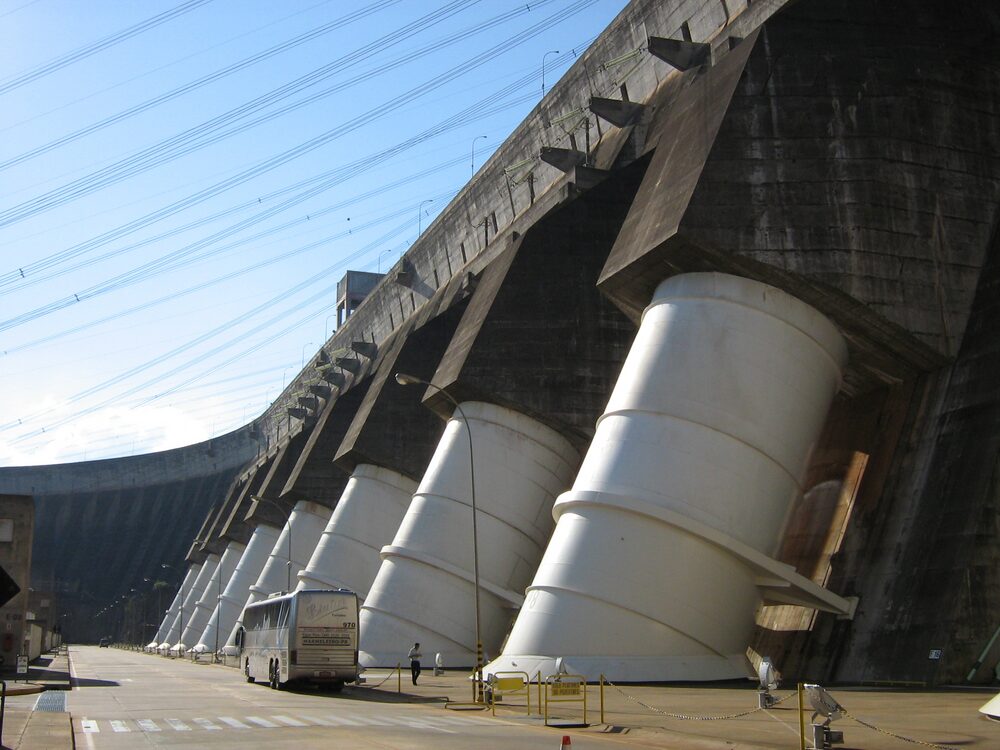
It produces 14 GW/h of power, enough for millions of households. And millions of hashes of your miner.
It took over 17 years to be completed (1975-1991). 40,000 workers compiled more than 170,000 tons of concrete to construct the dam, which can produce up to Brazilian and Paraguayan skilled workers operate the dam 24/7.
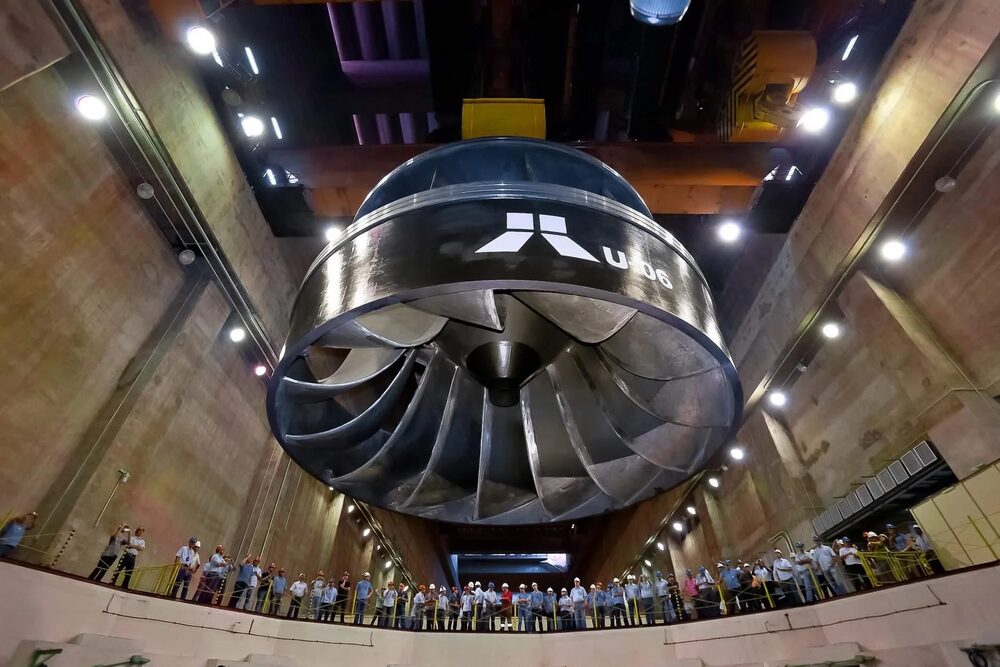
The Siemens turbines rotate with 185,000 gallons of water per second. Each turbine produces 700 MW/h for a total of 14,000 MW/h of production capacity.
Why is that important?
Because in mining, it’s all about turning power into bitcoin.
The Number That Decides Everything in Bitcoin Mining: Your Electricity Rate
If there is one single variable that determines whether a Bitcoin miner makes money or loses it, it is this: the price of electricity.
Not the Bitcoin price. Not the hardware. Not the mining pool fees. Electricity. Everything else is secondary.
And thanks to an exclusive deal we were able to seal, you can get in on a power deal with the Itaipu Hydro-Power Dam. More about this in a second.
For mining to be profitable, you need electricity priced between $0.02 and $0.07 per kilowatt-hour. That’s the “profit window”. Below it, you’re making money almost regardless of market conditions. Inside it, you’re competitive. Above it—at the $0.12, $0.15, $0.20 per kilowatt-hour that most households in the United States, Europe, and Australia actually pay—you are loudly and expensively losing.
Unless you’re using a water-cooled model or use immersive cooling, home mining means burning money at 120F and with 75 decibel screaming at you while sucking 3000W.
This is why home mining doesn’t work for 99% of people.
Not because the hardware is too complex. Not because Bitcoin is too volatile. Because the electricity that flows out of your wall socket was priced for consumers, not for industrial computation. You are paying retail for a wholesale activity. The math simply does not work, and no amount of enthusiasm changes that.
The only exceptions are people with genuinely unusual access to cheap power. The person who owns a farm with cheap rural electricity. The person who lives next to a stranded natural gas well. The person — and yes, this is a real category — whose uncle works at a power plant and can get industrial-rate power locked in at source. These people exist. They mine profitably at home. But they are the exception, not the rule, and they know exactly why they have an edge that others don’t.
For everyone else, the path to that edge runs through a professional facility that has already done what you cannot do alone: negotiate industrial power rates and lock them in for years.
Our Rate Is $0.0611. And the Power Comes From One of the Most Extraordinary Engineering Projects in Human History.
The electricity powering your machine in this offer costs $0.061 per kilowatt-hour. That puts it squarely inside the competitive window — below the threshold where serious miners operate, and far below what any household in a developed country pays.
But where that electricity comes from is the part worth pausing on. Because it doesn’t come from a coal plant, or a gas turbine, or a grid drawing from a dozen mixed sources. It comes from the Itaipu Dam.
If you don’t know what the Itaipu Dam is, you are about to. Because it is one of those things that, once you learn about it, makes every other power source feel slightly ordinary by comparison.

Itaipu sits on the Paraná River, on the border between Brazil and Paraguay. It is one of the seven wonders of the modern world — officially designated so by the American Society of Civil Engineers in 1994, alongside the Channel Tunnel, the CN Tower, and the Panama Canal. It is not a metaphor. It is a concrete structure nearly 200 meters tall and almost 8 kilometers wide, built between two nations, involving 40,000 workers, 12.7 million cubic meters of concrete — enough to build 210 Maracanã stadiums — and enough iron and steel to construct 380 Eiffel Towers.
Its 20 turbines generate 14,000 megawatts of power. In a single record-breaking year, it produced over 103 terawatt-hours of electricity — equivalent to burning 50 million tonnes of coal. It supplies roughly 90% of Paraguay’s entire national electricity consumption and about 15% of Brazil’s. It is not a power station. It is a force of nature that humanity managed to harness and point at a grid.
And here is the part that matters for your machine: the dam is paid for. Fully. Completely. Built over a decade starting in 1975, at a cost of nearly $20 billion, it has been generating power ever since 1984. The debt is settled. The infrastructure exists. The river keeps flowing. The turbines keep turning. The electricity it produces costs almost nothing to generate at this point — because the capital expenditure that built it is decades in the past, and the fuel — water, gravity, the Paraná River — is free.
That is why the power rate is $0.047. Not because someone is subsidizing it or cutting corners. Because the energy source is a paid-off megaproject producing clean hydroelectric power at scale, and the economics of that pass through to the rate you pay.
There is also something worth noting about what it means to plug your machine into this particular grid. This power is 100% renewable. Every sat your miner produces is backed by water moving through turbines that have been spinning since Ronald Reagan was in his first term. No carbon. No fuel cost. No geopolitical supply chain. Just gravity, water, and a dam built to last a century.
Access to Itaipu power is not something you can arrange on your own. It flows through a tightly managed national grid serving two countries. Getting a slice of it at the rates available to industrial operations in Paraguay requires relationships, infrastructure, and regulatory positioning that took years to establish. You are not buying electricity. You are inheriting access to it — because the facility already built what it took to earn that access, and your machine plugs directly into the result.
Your machine, running on Itaipu power at $0.061 per kilowatt-hour, is operating at the competitive edge of global Bitcoin mining. Not the home-miner tier. Not the hobbyist tier. The tier where professional operations run — except the professional operation is running your machine, and the Bitcoin goes to your wallet.
You Own the Machine. Professionals Run It. The Bitcoin Goes Directly to You.
Here is what Mining-as-a-Service actually means. Once you understand the structure, you’ll “get it”. It is a genius way to crack the code and generate wild sats while you sleep.
Your machine lives in a professional facility purpose-built for this hardware. The facility runs on cheap, renewable hydropower — not the expensive grid electricity most homes use. The electricity rate available to that facility is a fraction of what you would pay running the same machine at home. In some cases, it’s more than 70% cheaper.
Professional engineers monitor the hardware around the clock. If something needs attention, they handle it. You don’t get a phone call at 2am. You don’t need to learn ASIC repair. You don’t need to manage cooling systems or worry about power infrastructure. All of that is handled.
And the Bitcoin your machine earns? It goes directly to your wallet. The wallet address you control. With your keys. No intermediary holds your earnings. No platform stands between your machine and your wallet. The protocol pays you directly, and the payout lands in cold storage — or wherever you choose to receive it.
The facility earns a monthly service fee. That fee covers everything: power, maintenance, cooling, security, monitoring, and support. It is the price of having professionals run your machine in optimal conditions so that it earns more, runs longer, and requires nothing from you beyond paying the fee and watching the sats accumulate.
This is not cloud mining. You are not buying hash power from someone else’s machine. You own the hardware outright. It is yours. If you ever want to sell it, you can. If you want to move it to a different facility, you can. The machine is your asset and the Bitcoin it earns is your Bitcoin — completely, from the first sat.
What People Who Are Already Doing This Say
“My first payout was seamless, reaching my cold storage wallet without any issues.” – a miner who started with a single machine and bought a second shortly after.
“You get to own the miner, and all purchase costs and Bitcoin mined are displayed clearly. They have really considered every last detail.” – a customer who initially hesitated, then acted when inventory started to dry up.
“I started with one rig in April and it quickly operated at maximum hash rate, earning Bitcoin efficiently with seamless payouts.” – a miner who had never operated hardware before his first hosted machine.
One customer reported earning back more than his initial investment in under a year.
These are real people, describing a real experience. Not daydreaming about what might happen, mining . What actually happened when they stopped thinking about it and started running the machine.
The Feeling Nobody Tells You About
There is something that happens the first time you receive a mining payout that has no equivalent in the experience of buying Bitcoin on an app.
You open your wallet. The balance is slightly higher than it was yesterday. And you know — with complete, verifiable certainty — that those sats came from work. Real work. Computation performed by a machine that you own, powered by electricity that was paid for, in service of a network that validated and rewarded that contribution.
No exchange touched them. No bank processed them. No KYC verification was required. The Bitcoin protocol itself credited your wallet, the same way it credited the first miners sixteen years ago, because your machine did what Bitcoin miners do.
The sats are clean. They are new. They have no prior history. They are, in the most literal sense, wild.
The satisfaction of that is difficult to articulate but impossible to miss. Once you’ve felt it, buying Bitcoin on an exchange feels like a different activity entirely — convenient, yes, but somehow hollow by comparison. Because it is. You were a customer, at their mercy. Now you are a producer. The difference is not small.
Mining Is Also How You Come to Truly Understand Bitcoin
You can read about proof of work. You can read about difficulty adjustments and block rewards and the halving cycle. You can understand all of it intellectually without ever running a miner.
But when your machine is running, something shifts. The concepts stop being abstract. The difficulty adjustment becomes something you feel — because when it drops, your daily sat earnings go up, without any change to your hardware. The halving becomes something you think about differently — because you are now on the production side, watching the supply math play out in real time. The relationship between energy and money becomes visceral — because you are the one converting one into the other.
Miners hold differently than buyers. Not because they are smarter or more disciplined, but because they have operational stakes in the network. They are not just watching the price — they are running part of the infrastructure that sets the price. That perspective changes everything. The short-term volatility that shakes loose so many hands barely registers when you understand, from the inside, what you are participating in.
This is not a side benefit of mining. For a serious Bitcoin holder, it may be the most valuable return of all.
Your Exclusive Opportunity To Become A Bitcoin Producer
Lightning.News has secured three Bitmain Antminer S19XP Hydro units. Each runs at 243 terahashes per second — that is serious, industrial-grade mining power. Each machine is hosted in a professional turnkey facility powered entirely by renewable hydropower, maintained by a team of experts whose incentives are fully aligned with yours: they earn a percentage of what your machine mines, so they have every reason to keep it running at peak performance.
You own the machine. The facility runs it. The Bitcoin goes directly to your wallet.
The price is $2,999 per unit.
There are three available. Not three hundred. Three.
Why $2,999 Is a Number Worth Sitting With
Comparable hosted mining setups have retailed at $3,847 and above for the same hardware class. The current price reflects a market that has compressed hardware valuations along with everything else — which is exactly the dynamic that makes this the right time to enter, not the wrong one.
You are acquiring production capacity at a trough valuation, which then earns bitcoin at that rate the market produces over the life of the machine. The machine typically runs for three to four years. It earns every single day it is operational. It earns while you eat, while you sleep, while you walk your dog.
The math is straightforward. The timing is favorable. The opportunity is limited.
What you are really buying, for $2,999, is a machine that produces wild sats — privacy-pure, exchange-free, protocol-direct Bitcoin — every day for years. Hands-free, the machine just runs, sitting in a professional facility you never have to think about, paying out to a wallet only you control.
The Facility Does Everything. You Do Nothing Except Receive Bitcoin.
Let’s be completely specific about what “turnkey” means here, because it matters.
The machine is already in the facility. All import duties paid. The facility installs it, connects it to power, configures it, and puts it online. From that moment forward, a professional team monitors its performance around the clock. If there is a technical issue, they handle it. If the machine needs maintenance, they handle it. You receive a dashboard where you can see your machine’s status, its hashrate, and your Bitcoin earnings in real time. But you never need to touch the machine.
The electricity powering your machine costs a fraction of what residential power costs in the United States or Europe. That’s not a minor detail — it is the fundamental economic advantage of professional serviced mining. Industrial-grade renewable power at industrial rates, unavailable to home miners, is what makes the numbers work. The facility has solved the hardest part of the mining equation, and you inherit that solution the moment your machine goes online.
You pay a monthly service fee. It covers everything. And critically: the facility only earns its fee when your machine is running and earning. Their incentive is to keep your machine hashing at maximum efficiency, every day, without interruption. That alignment is built into the structure of the arrangement.
Three Machines. Three People. One Window.
The window is the part that matters now.
Network difficulty changes. That means every miner currently operating on the network could become more competitive — earning a larger share of the block reward without any change in their hardware. New miners coming online right now enter can immediately benefit from a difficulty adjustment.
Windows like this are not permanent. As Bitcoin’s price recovers, new miners come online, difficulty rises, and the edge narrows. The person who enters during the trough earns sats at the best production cost. The person who waits for confirmation that the storm has passed pays the price of certainty — which, in mining, is the production cost of the next bull market.
Every previous Bitcoin cycle has produced this same pattern. The people who built positions — especially mining positions — during periods of maximum pessimism ended up, without exception, with more Bitcoin than the people who waited. Not because they were smarter. Because they were earlier.
You have held through discomfort before. You know how that story ends.
A Final Word on What You Are Really Deciding
This is not a decision about whether to spend $2,999.
It is a decision about what kind of Bitcoin holder you are going to be from this point forward.
The person who only buys is a customer of the Bitcoin network, a beneficiary of what miners do, without participating in the doing. That is a perfectly valid choice. Billions of people will hold Bitcoin without ever mining a sat, and they will benefit enormously from doing so.
But there is another category. The person who mines is a participant. Someone who has skin in the game not just as a holder, but as an operator. Someone whose Bitcoin arrives clean, direct, and unencumbered. Someone who understands the network from the inside rather than watching it from the outside. Someone who earns wild sats — and knows, every time a payout arrives, exactly what that means and why it matters.
You have already held at least one full Bitcoin. You have already demonstrated that you are serious. This is the next expression of that seriousness, not a trade, not a speculation, but a decision to produce Bitcoin the way Bitcoin was designed to be produced.
Three machines. Three people who will make that decision.
The only question is whether you are one of them.
Secure your S19XP Hydro now — $2,999, fully hosted in a turnkey professional facility, 243TH of wild sats paid directly to your wallet. Only 3 units available.Contact Lightning.News to claim yours before they’re gone.
Disclaimer: Mining profitability depends on Bitcoin price, network difficulty, electricity costs, and other factors that change over time. Past results do not guarantee future performance. This is not financial advice. This is not tax or legal advice. Do your own research before making any investment decision.. Lightning News does not operate mining facilities. Lightning News only sells mining hardware and connects with the mining-as-a-service operator.